
Sumin Hyun
Pucca
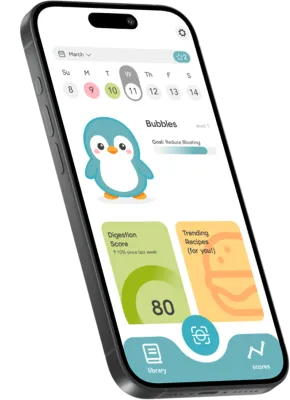
Empowered users to uncover food triggers through personalized meal insights and digestion tracking.
Your gut's new best friend!
OVERVIEW
Digestive discomfort is a common experience, yet identifying its underlying causes can be difficult. Many people rely on trial and error because existing tracking methods are time consuming and require extensive manual logging. This creates a disconnect between what people eat and how they understand their digestive health.
Team
- 2 product designers
- 2 UX designers
My Role
- UX Designer
Timeline
- 3 Months
Tools
- Figma
- Fusion 360
The Problem
People experiencing bloating often struggle to identify food triggers because existing solutions rely heavily on manual tracking and present health information in ways that are difficult to interpret
The Goal
How might we simplify meal tracking while helping users better understand the relationship between their meals and digestive comfort?
RESEARCH
Our Research Goals
- 01Understand frequency & severity
- 02Identify triggers & patterns
- 03Assess impact on daily life
- 04Uncover unmet needs & opportunities
Quantitative Data - Survey
We developed a 15-question survey combining quantitative and qualitative questions to better understand users' bloating experiences, behaviors, and unmet needs.
Key Findings
Experience bloating at least a few times a week
Bloating is recurring, suggesting a need for ongoing support.
Experience bloating after meals
Meals became a key area for design exploration.
Report greasy foods / dairy as common triggers
Users need help connecting specific foods with how they feel.
Open to trying a solution that detects triggers and reduces bloating
Participants showed interest in new approaches to managing bloating.
The survey confirmed that bloating is a frequent issue affecting daily life and highlighted opportunities to improve awareness, identify triggers, and reduce manual tracking.
Qualitative Data - Interviews
While the survey identified broad trends, interviews helped uncover personal experiences, emotions, and behaviors that quantitative data could not capture.
Rachel
Age 22
Female
UNCERTAINTY
“I wish I knew what specifically caused it... and what I could do that wouldn’t make me feel constantly bloated all day.”
Users struggle to identify the specific causes of their bloating and want greater clarity around their triggers.
Laura
Age 23
Female
PERSONALIZATION
“It's kind of different for everybody how their body reacts to certain types of food.”
Bloating triggers vary between individuals, highlighting the need for personalized rather than one-size-fits-all guidance.
Brandon
Age 22
Male
TRIAL & ERROR
“I’ll fix some habits, but then I’ll still notice that I’m still becoming bloated often.”
Changing habits without understanding underlying patterns can leave users uncertain about what is actually helping.
Aanjisnu
Age 21
Female
KNOWLEDGE GAP
“I just know general guidelines... I think my knowledge ends there.”
Users may understand general digestive advice but lack the personalized insights needed to make informed decisions.
Research Synthesis - Affinity Map
After conducting interviews, we organized
This process provided insights that informed design decisions and guided our future design directions.
Click to enlarge
Research Synthesis - Affinity Map
We synthesized our research into six opportunity areas and prioritized the three with the greatest potential for design exploration.
- 01Symptom Tracking
- 02Food Insights
- 03Fast Relief
- 04Personalized Recommendations
- 05Health Warning
- 06Habit Building
DEFINE
Time to Debloat
We synthesized our research into three key opportunity areas and translated each into design implications, guiding three distinct concepts for addressing bloating.
Insights
Design Implications
Fast Relief
Users wanted quick ways to reduce discomfort when bloating occurs.
Handheld Massager
A portable abdominal massager using heat and gentle massage for targeted, on demand relief.
Digital Features
- User based personalization
- Guided Tutorial
- Usage Tracking
- Pattern Recognition
Physical Features
- Heart Relief
- Portable
- Vibration Massage
- Intensity Modes
Fast Relief + Food Insights
Bloating often occurred after meals, while users struggled to identify specific food triggers.
Smart Plate Device
Selected Concept
A connected plate that identifies and weighs food, helping users connect their meals with digestive patterns.
Digital Features
- Food Scanning
- Trigger Identification
- Portion Tracking
- Digestion Tracking
- Meal Logging
Physical Features
- Portion Measurement
- Wireless
- Food Recognition Support
- Weight Sensing
Fast Relief + Personalized Suggestions
Symptoms and areas of discomfort varied, highlighting the need for more personalized support.
Bloating Relief Wearable Device
A wearable that provides targeted relief based on where users identify discomfort through the companion app.
Digital Features
- Discomfort Rating
- Body-Map Input
- User Based Personalization
- Pain Location Logging
Physical Features
- Heat Relief
- Adjustable Fit
- Vibration Massage
- Intensity Modes
The First Solution isn’t always the best...
While the smart plate addressed our research goals, evaluating real world use cases revealed an opportunity to create a more portable and practical solution.
Personas
Our personas frequently ate away from home, making a fixed smart plate impractical.
Real World Scenario
Using a plate sized device at restaurants or cafés could feel inconvenient and conspicuous.
Research Insights
Users valued convenient, low effort ways to understand triggers.
Current Concept
Smart Plate + Companion App
A connected plate that identifies and weighs meals to help users track food and uncover potential bloating patterns.
- Bulky to carry between meals
- Could draw unwanted attention in public
- Requires users to eat from or with the device
Limitations
Final Concept
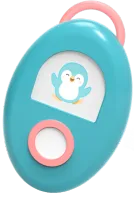
Smart Scanner + Companion App
A pocket-sized food scanner that captures meal information on the go while connecting users to personalized digestive insights through the companion app.
- Portable and discreet
- Works across all dining environments
- Fits more naturally into existing routines
- Makes consistent tracking more practical
Benefits
PROTOTYPE
How It All Connects
We mapped the end-to-end journey to visualize how users move between the physical scanner and companion app throughout the experience.
Onboarding/Pairing
Meal Scanning
Insights/Feedback
Logging/Tracking
Purchase Pucca Scanner + Install app
Power on Pucca Scanner
Pair device
Scan Meal
Create Profile
Pick pet & digestive goal
Device pairing
Edit Meal Content
Meal insights + digestion score
Post-meal survey + notes
Meal insights + digestion score
View past meals in food library
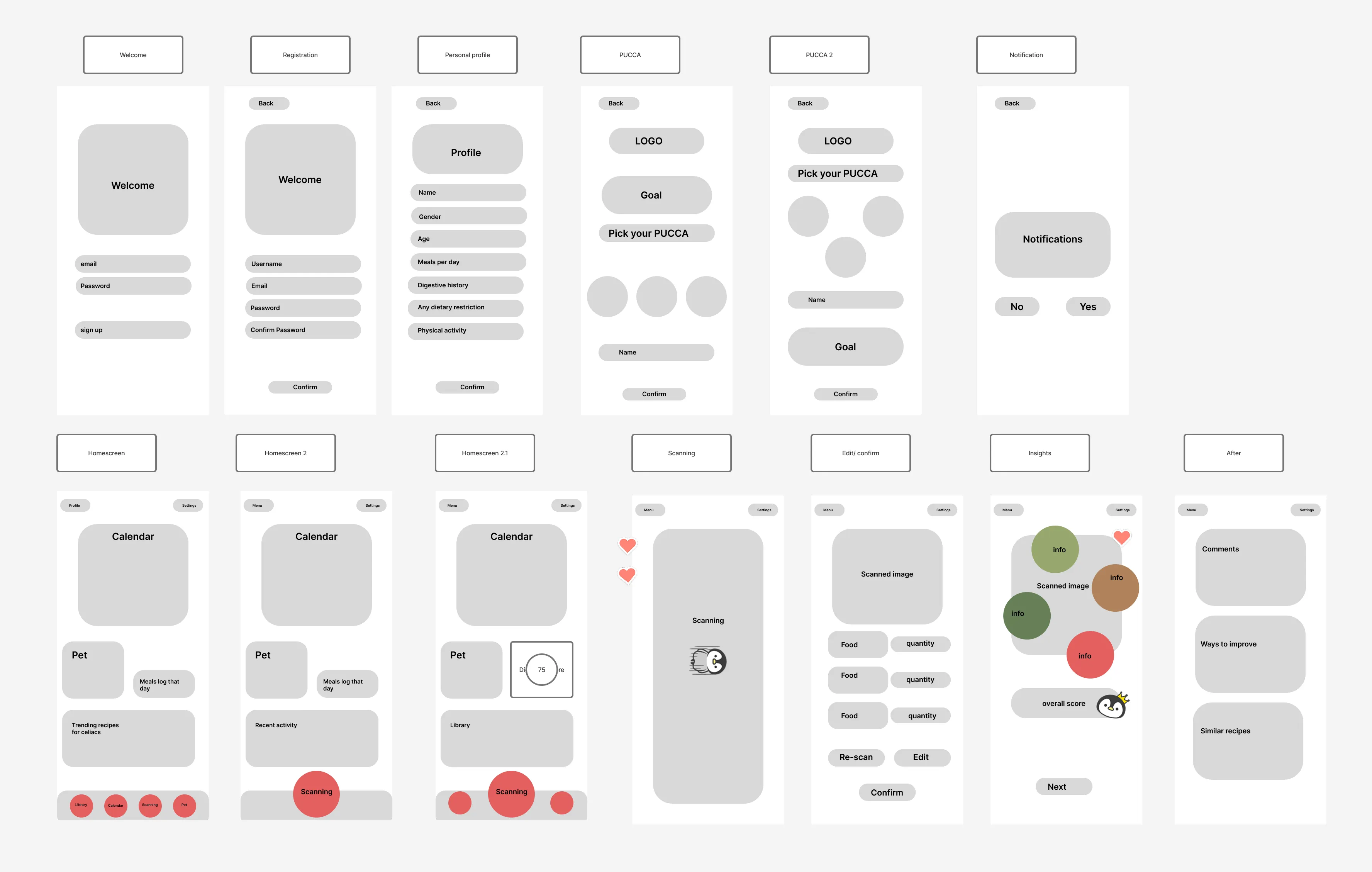
Low Fidelity
We translated the user flow into low-fidelity wireframes to establish the app’s structure, navigation, and core interactions before refining the visual design.
pucca - lofi prototype
USER TESTING
Putting Pucca to the Test
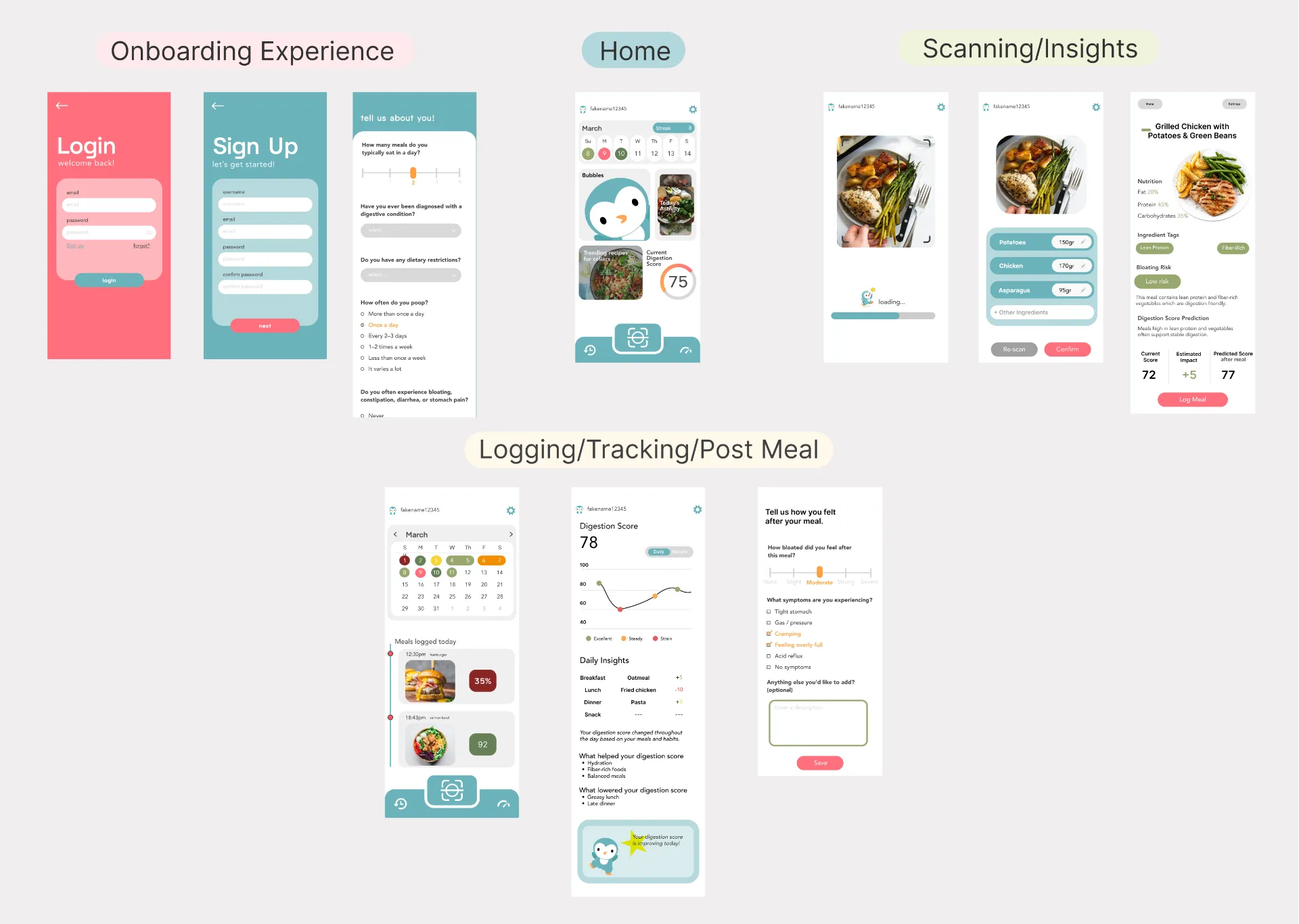
We evaluated the prototype with users to understand how easily they could complete key tasks, interpret digestive insights, and navigate the overall experience.
Testing Goals
- 01
Workflow Clarity
Evaluate whether users could intuitively navigate Pucca’s core experience.
- 02
Task Efficiency
Identify friction, errors, or hesitation while completing key tasks.
- 03
Insight Comprehension
Understand whether users could interpret meal information and digestion feedback.
screens tested
Testing Metrics
100%
Task Completion
All tasks were completed successfully
25%
Task Confusion
1/4 Users experienced confusion when interpreting the Digestion Score/insight
<1 min
Avg Task Time
Tasks were consistently completed in under a minute.
ITERATION
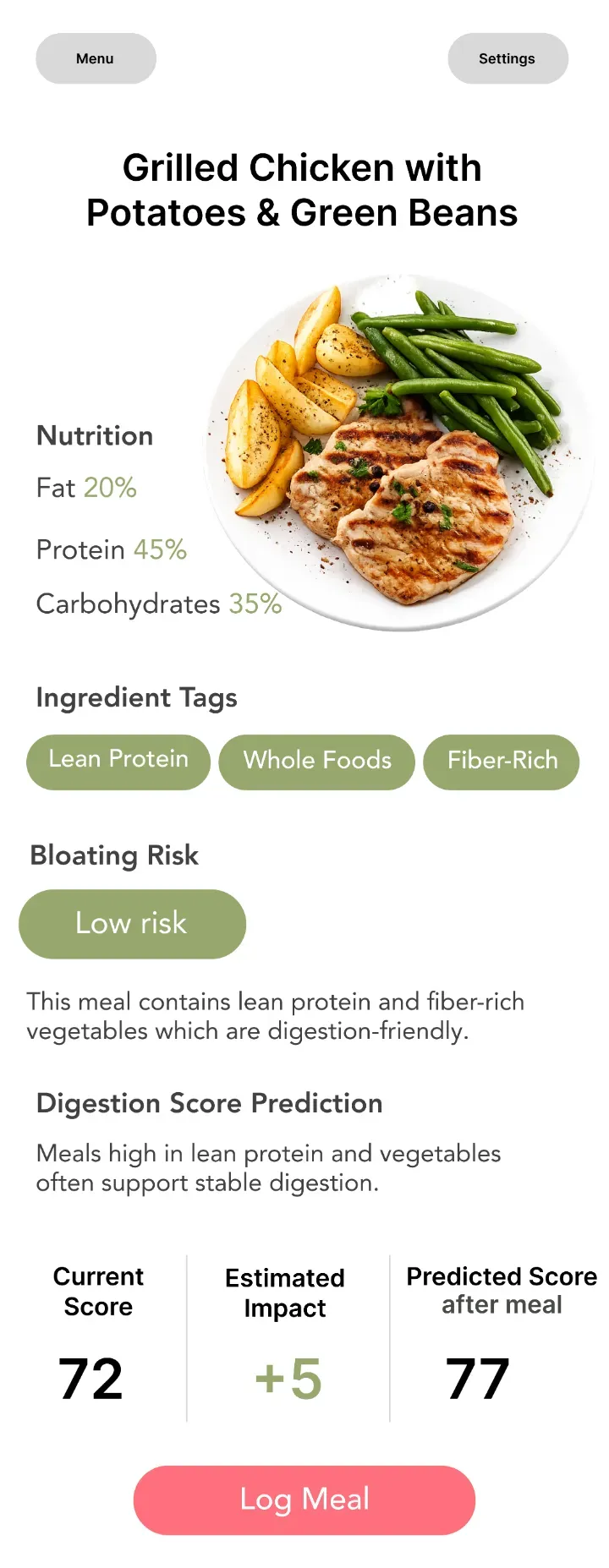
Most Friction - Understanding Digestive Insights
Users wanted clearer, more specific information about how their meal could affect bloating. Fiber was missing, some information lacked hierarchy, and the overall screen was difficult to scan quickly.
Before
After
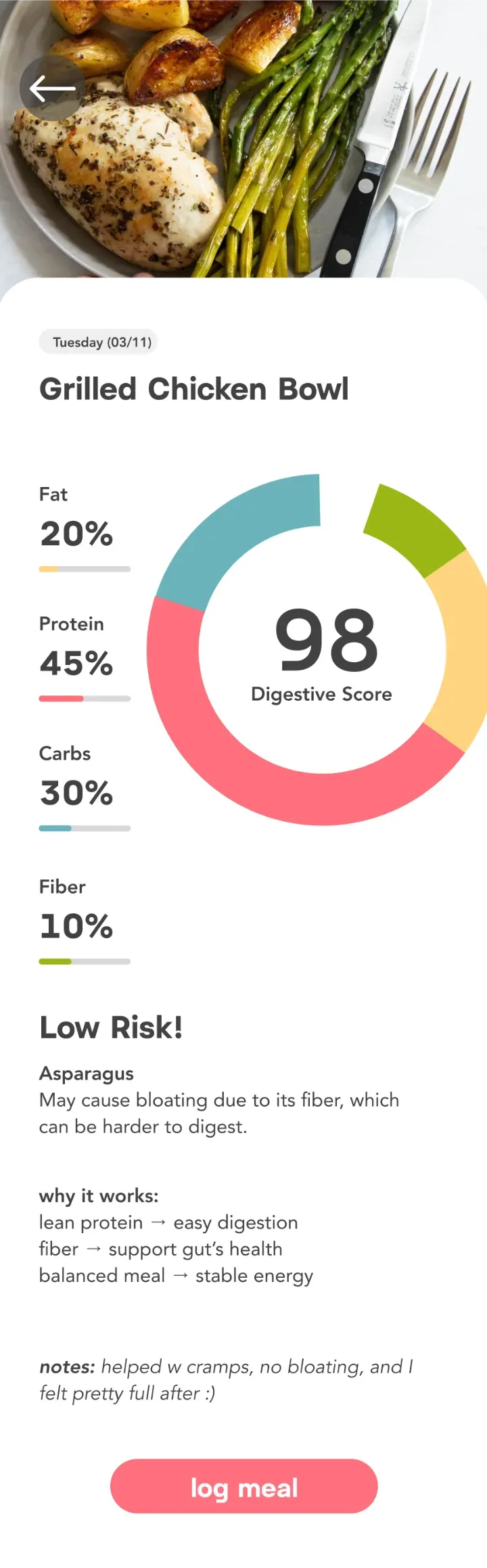
Improvements
Color & Heirarchy
Strengthened color + hierarchy to distinguish key information at a glance.
Fiber
Added fiber to provide more digestion relevant nutritional information.
Ingredient Insights
Introduced ingredient specific insights to explain which foods may contribute to bloating.
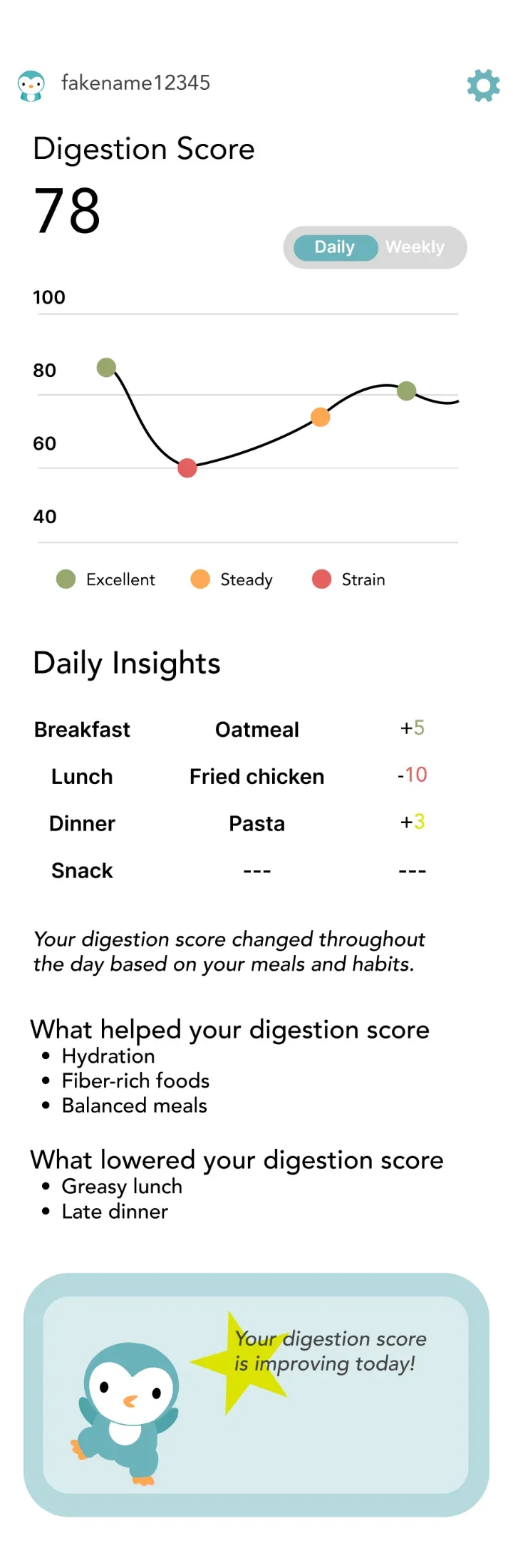
Making Digestion Scores Easier to Understand
Users experienced friction interpreting their daily and weekly Digestion Scores, particularly understanding what scores meant and quickly identifying important patterns.
Before
After
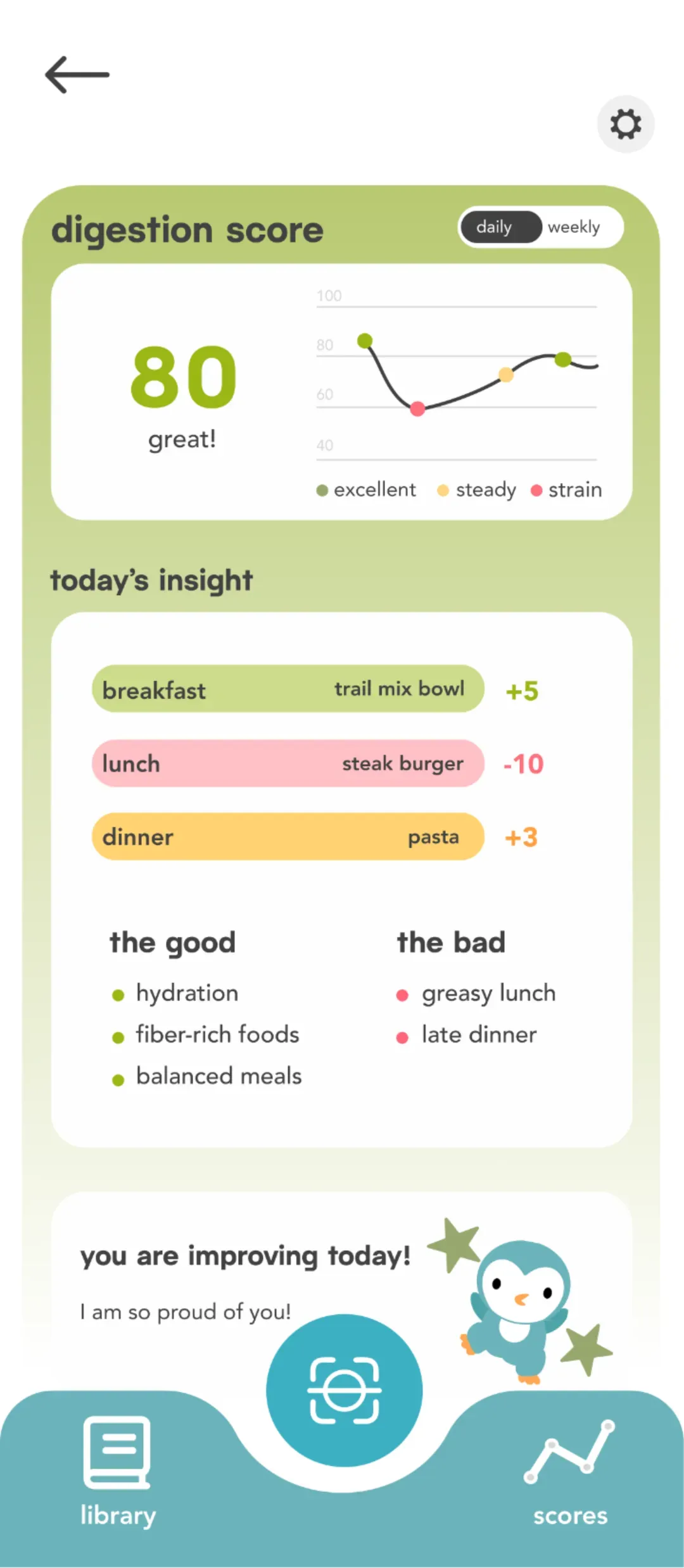
Improvements
Score Context
Added score context so users could understand what their numbers meant.
Color
Strengthened color semantics to make positive, neutral, and negative outcomes clearer.
Quick Scanning
Simplified content to reduce wordiness and support quick scanning.
Branding
Unified branding and UI patterns to create a more consistent design language across the app.
FINAL
Branding
With the core experience refined, we developed a playful visual identity that connects the physical scanner, virtual pet, and digital experience through one cohesive design language.
Pacaembu Semibold
ABCDEFGHIJKLMNOPQRSTUVWXYZ
abcdefghijklmnopqrstuvwxyz
1234567890
Bear motif meaning
Bear shape reflects app's virtual pet
Minimal branding
Ensures scalability across platforms
#FF5F7D

#FFD480

#6BB3BB

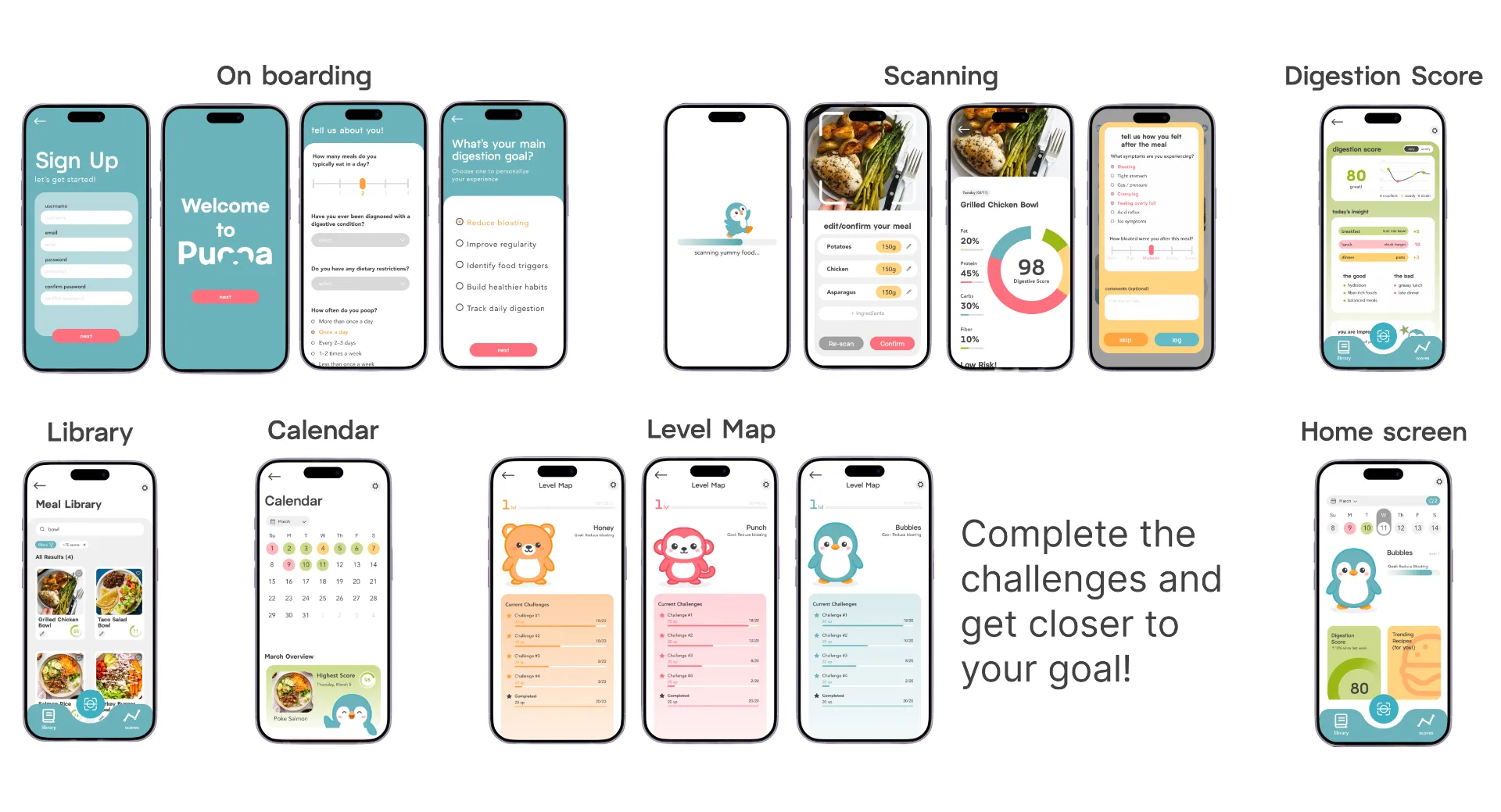
Meet Pucca
Bringing research, usability testing, and a cohesive visual identity together into a connected experience for understanding food and digestive patterns.
meet pucca
REFLECTION
Beyond Usability
If I continued developing Pucca, I would move beyond usability testing to evaluate its long term impact.
- 01
Measure Understanding
Track whether users become more confident identifying foods and ingredients associated with their discomfort.
- 02
Evaluate Long Term Impact
Conduct a longitudinal study to see whether continued use helps users anticipate and reduce unexpected bloating episodes.
- 03
Validate Real World Value
Explore whether clearer records of meals, symptoms, and patterns help users have more informed conversations with healthcare professionals when needed.
Acknowledgements
This project would not have been possible without my incredible team and the guidance of our professor, Leila Aflatoony. Her mentorship and thoughtful checkpoints gave us the structure to deeply explore our topic while staying focused through each stage of research, ideation, and testing. I’m incredibly proud of what we created together and grateful for the guidance that made the process so rewarding.